


Meta title: Hurricane Season Prep for Your Houston Yard | Junk It Mobile Dumpsters
Meta description: Preparing for storm debris in Houston, Pasadena, Pearland, or Galveston? Learn how a driveway-safe mobile dumpster trailer helps manage branches, fencing, furniture, and renovation debris safely.
Suggested URL slug: /hurricane-season-prep-houston-yard-mobile-dumpster/
Focus keywords: Houston storm debris cleanup, Houston mobile dumpster rental, hurricane cleanup Houston, driveway-safe dumpster trailer, Galveston storm debris removal
Houston hurricane season has a way of turning a peaceful backyard into a surprise outdoor renovation project.
One minute, you’re enjoying a quiet afternoon. The next, you’re looking at broken fence panels, tree branches, soaked patio furniture, and enough leaves to make your yard look like it lost a fight with a forest.
Hurricane season runs from June 1 through November 30, with August and September typically bringing peak activity along the Texas Gulf Coast. That makes preparation especially important for homeowners and contractors in Houston, Pasadena, Pearland, League City, Clear Lake, Galveston, and nearby coastal neighborhoods.
A mobile dumpster trailer can help keep the cleanup organized. But first, safety comes before hauling, lifting, or loading anything.
Start with safety, not the chainsaw
After a storm, your yard may look messy. It may also contain hazards that are not obvious at first glance.
Before you begin cleanup:
- Stay away from downed or damaged power lines.
- Assume every fallen line is energized.
- Do not touch branches, fencing, or other debris near a power line.
- Avoid standing water and floodwater.
- Keep children and pets away from damaged structures and storm debris.
- Wear sturdy gloves, boots, eye protection, and a mask when appropriate.
- Do not enter a damaged structure until it has been inspected.
- Leave gas leaks, chemical spills, and electrical hazards to trained professionals.
Houston Office of Emergency Management advises residents to avoid floodwater, use proper protective equipment, and wait for official guidance before returning to unsafe areas. The Houston Office of Emergency Management hurricane guidance is a helpful resource for preparation, evacuation information, and post-storm recovery.
The same rule applies whether you live near downtown Houston, along the Ship Channel in Pasadena, around Pearland, or closer to the coast in League City and Galveston: if debris is tangled with utilities, leave it alone.
That branch is not worth your back, or your eyebrows.
Prepare your Houston yard before the storm
The best storm cleanup is the cleanup you reduce before the wind arrives.
Walk around your property and look for items that could become airborne or cause damage. Secure or move patio furniture, grills, toys, planters, umbrellas, decorations, trampolines, and loose building materials.
You should also inspect trees for dead limbs or branches hanging over your home, driveway, vehicles, or power lines. Have questionable trees and limbs evaluated by a qualified professional. Do not attempt to trim anything close to electrical lines yourself.
The Texas Department of Insurance hurricane preparation guide recommends removing dead branches and securing outdoor items before a storm. It also encourages homeowners to review insurance information, document property conditions, and prepare for wind and flood damage.
A little preparation can make a big difference in Houston neighborhoods where mature trees and strong Gulf weather meet. The same goes for the coastal communities around Clear Lake, Seabrook, Kemah, San Leon, and Galveston, where wind and water can create extra cleanup challenges.
If you are already planning a tree-trimming project, fence replacement, patio refresh, or exterior renovation, consider arranging a mobile dumpster trailer ahead of time. Scheduling early gives you a clear place for non-hazardous project debris instead of leaving loose piles scattered around the property.
Just remember: scheduling ahead is smart planning, not an emergency-service promise. Delivery and pickup depend on the agreed schedule and current availability.
What storm debris can go into a mobile dumpster trailer?
Junk It Mobile Dumpsters’ driveway-safe mobile dumpster trailers are designed for many common residential and small commercial cleanup projects.
Depending on local disposal requirements and the specific rental arrangement, common non-hazardous storm and renovation debris may include:
- Cut tree branches and shrubs
- Damaged fencing and fence posts
- Broken outdoor furniture
- Torn-out decking
- Non-hazardous siding
- Roofing shingles
- Drywall and flooring from interior repairs
- Cabinetry and fixtures
- Small demolition debris
- Damaged cardboard and household materials
Branches should be cut into manageable pieces when possible. Larger debris can take up more space than expected, so break down fencing, furniture, and bulky materials before loading whenever it is safe to do so.
A good loading plan also matters. Put heavier materials on the bottom. Place smaller branches and lighter debris around larger pieces. Keep the load below the top of the trailer walls, and never climb into the trailer to rearrange material.
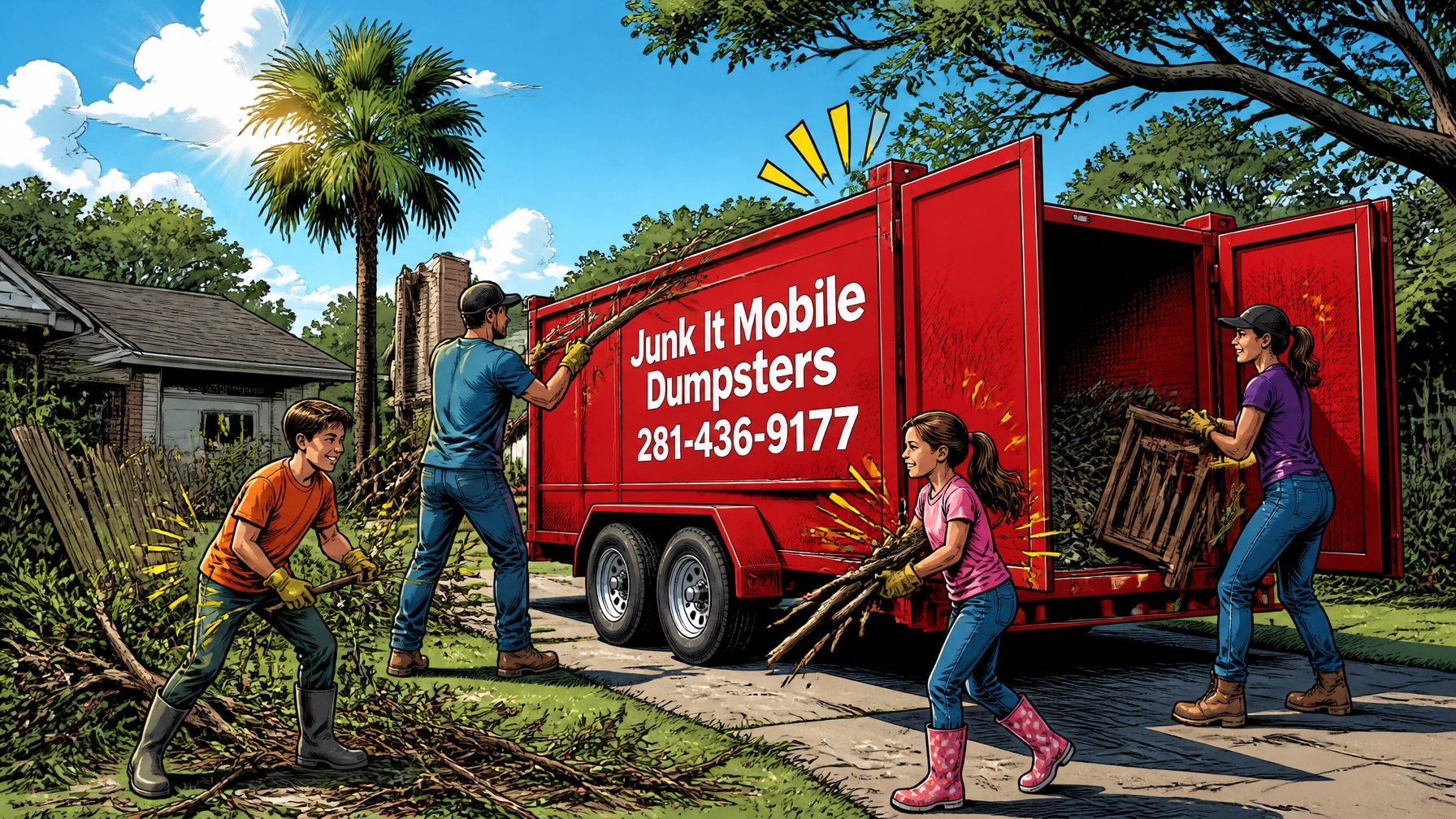
A family cleanup can move quickly when everyone has a job. Adults can handle heavier items. Older children can help gather small branches or sort undamaged items away from the work area. Younger children should stay well clear of active loading.
Want another reason to keep the pile organized? You will spend less time stepping over debris and more time getting your yard back.

Why a rubber-tire mobile dumpster works well in Houston
Traditional waste equipment is not always a great fit for residential driveways, landscaped yards, or tight Houston neighborhoods.
Junk It Mobile Dumpsters uses rubber-tire dumpster trailers that can be positioned with greater flexibility around many residential and commercial properties. The design is especially useful for homeowners who want to protect their driveway and avoid placing heavy equipment across delicate landscaping.
Each dumpster trailer is:
- Driveway-safe in design
- Mounted on black rubber tires
- Completely open at the top
- Built with tall, vertical 4-foot side walls
- An open rectangular box on wheels
- Equipped with open back double-doors for easier loading
The tall 4-foot walls provide substantial space for bulky branches, fencing, outdoor furniture, and renovation debris. The completely open top makes it easier to load awkward items without an overhead obstruction. The open back double-doors also allow you to walk larger items directly into the trailer instead of lifting everything over the side.
That can be a major advantage after a storm, when the last thing your shoulders need is an Olympic-level furniture toss.
The trailer should be placed on stable ground away from utility lines, drainage paths, fire hydrants, and areas that may flood. Keep access points clear so people can safely move between the house, yard, and trailer.
Keep hazardous materials out
Storm cleanup often uncovers more than branches and fence boards. You may find paint, fuel, pesticides, pool chemicals, batteries, automotive fluids, or other materials that require special handling.
Do not place hazardous materials into a general mobile dumpster trailer unless Junk It specifically confirms that the material is accepted.
Keep these items separate:
- Gasoline, diesel, and other fuels
- Paint, solvents, and chemical products
- Pool chemicals
- Pesticides and herbicides
- Batteries
- Automotive fluids
- Medical waste and sharps
- Unknown leaking substances
- Items contaminated by sewage or hazardous spills
You should also ask before loading appliances, electronics, tires, or refrigerant-containing equipment. These items may require separate disposal or additional charges.
Most importantly, do not move debris that is touching or near a downed power line. Contact the appropriate utility provider or emergency authority and wait for professionals.
For current emergency information, evacuation guidance, and local alerts, visit Houston Office of Emergency Management and consider registering for official alerts.
Curbside debris or mobile dumpster trailer?
After a major storm, a city or county may organize curbside debris collection. Rules can vary by location and event.
Houston, Harris County, Galveston County, Pasadena, Pearland, League City, and other communities may provide specific instructions about separating vegetative debris, construction debris, appliances, electronics, and hazardous materials.
Before putting anything at the curb, check your local government’s instructions. Do not block streets, sidewalks, storm drains, ditches, fire hydrants, or utility access points.
A mobile dumpster trailer is useful when you want to manage your own cleanup on-site. It can help with:
- Private-property debris
- Yard and fence cleanup
- Renovation materials
- Small demolition projects
- Overflow that is not part of a scheduled public collection
- Debris that needs to be hauled away on a planned schedule
Take photos of property damage before cleanup if you may need to file an insurance claim. Photograph damaged fencing, trees, outdoor furniture, roofing, siding, and other affected areas. The Texas Department of Insurance storm resources offer additional information about documentation and recovery.

A simple Houston storm-cleanup loading plan
Once the area is safe, use this process to keep the project moving.
1. Photograph the damage
Document the yard, fence, exterior walls, roof, vehicles, and damaged belongings before removing anything.
2. Separate the debris
Create separate areas for:
- Vegetative debris
- Construction and renovation debris
- Reusable or donated items
- Appliances and electronics
- Hazardous materials
- Items requiring professional removal
3. Create a safe work zone
Keep children, pets, and visitors away from active cleanup. Mark slippery areas and avoid unstable trees, damaged roofs, and weakened structures.
4. Load the mobile dumpster trailer carefully
Use the open back double-doors for bulky items. Break down fencing and furniture when safe. Keep the trailer balanced and do not overload it above the tall side walls.
5. Keep access and drainage clear
Do not place branches, furniture, or debris across walkways, drains, ditches, or driveway entrances. Houston-area rain can return quickly, and blocked drainage can turn a cleanup area into a muddy obstacle course.
6. Contact professionals for dangerous work
Tree removal near utilities, structural damage, electrical repairs, gas leaks, mold remediation, and hazardous-material cleanup should be handled by qualified professionals.

Mobile dumpster rentals for Houston homeowners and contractors
Junk It Mobile Dumpsters has served Houston and Galveston County for more than 20 years. Our family-owned company provides mobile dumpster rentals and junk removal support for homeowners, remodelers, roofers, general contractors, and small demolition crews.
For homeowners, a mobile dumpster trailer can make storm cleanup more manageable after:
- Tree damage
- Fence damage
- Patio or deck damage
- Outdoor furniture loss
- Garage or shed cleanup
- Water-damaged renovation work
- Yard improvement projects
For contractors, the same equipment can help keep job sites cleaner during roofing, remodeling, small demolition, and exterior repair work. Contractor discounts are available for qualifying businesses renting multiple mobile dumpster trailers.
Junk It Mobile Dumpsters carries a verified 4.8-star customer rating and offers pricing starting at $299 plus the dump fee. The final cost depends on the trailer size, material, location, rental details, and disposal requirements.
You can also explore our residential dumpster rental service, construction dumpster rental service, and full-service dumpster rental option.
We serve Houston and nearby communities, including Pasadena, Pearland, League City, Clear Lake, Galveston, Friendswood, Seabrook, San Leon, Dickinson, La Porte, Baytown, and other Houston- and Galveston-area neighborhoods.
Frequently asked questions
Can I use a mobile dumpster trailer for tree branches after a hurricane?
Yes, non-hazardous branches and yard debris are common cleanup materials. Cut large branches into manageable pieces when possible, and confirm any material restrictions before loading.
Are Junk It Mobile Dumpsters’ trailers safe for driveways?
The trailers are designed with rubber tires for driveway-friendly placement. The placement area should still be inspected for soft ground, steep slopes, drainage concerns, overhead hazards, and access limitations.
How tall are the trailer walls?
Junk It Mobile Dumpsters’ mobile dumpster trailers have tall, vertical 4-foot side walls and a completely open top. They are open rectangular trailers on black rubber tires with open back double-doors.
Can I put paint, gasoline, pool chemicals, or batteries in the trailer?
Do not load hazardous materials unless Junk It confirms they are accepted. Keep chemicals, fuels, batteries, and unknown leaking substances separate and arrange proper handling.
Can children help with storm cleanup?
Children can help with safe, age-appropriate tasks such as collecting small sticks away from hazards or sorting undamaged items. They should never handle sharp debris, chemicals, power-line-related debris, broken glass, or heavy materials. Keep children away from the active loading area.
Do you offer contractor discounts?
Contractor discounts are available for qualifying businesses renting multiple mobile dumpster trailers. Call to discuss your project and rental needs.
How much does a mobile dumpster rental cost?
Pricing starts at $299 plus the dump fee. The total depends on the trailer size, location, material, rental details, and disposal requirements. Call for a project-specific quote.
Get your Houston storm cleanup plan moving
A storm cleanup project does not have to become a second storm.
Start with safety. Document damage. Separate hazardous materials. Follow local curbside instructions. Then use a driveway-safe, rubber-tire mobile dumpster trailer to keep branches, fencing, broken outdoor furniture, and renovation debris under control.
Whether you are cleaning up a Houston backyard, repairing a Pasadena fence, clearing a Pearland property, renovating in League City, or managing storm debris near Clear Lake or Galveston, Junk It Mobile Dumpsters can help you plan the waste-management side of the project.
Call 281-436-9177 to discuss your mobile dumpster rental.
Junk It Mobile Dumpsters: over 20 years of family-owned Houston and Galveston-area service, with driveway-safe open-top trailers built for real cleanup projects.

